One-bowl meals
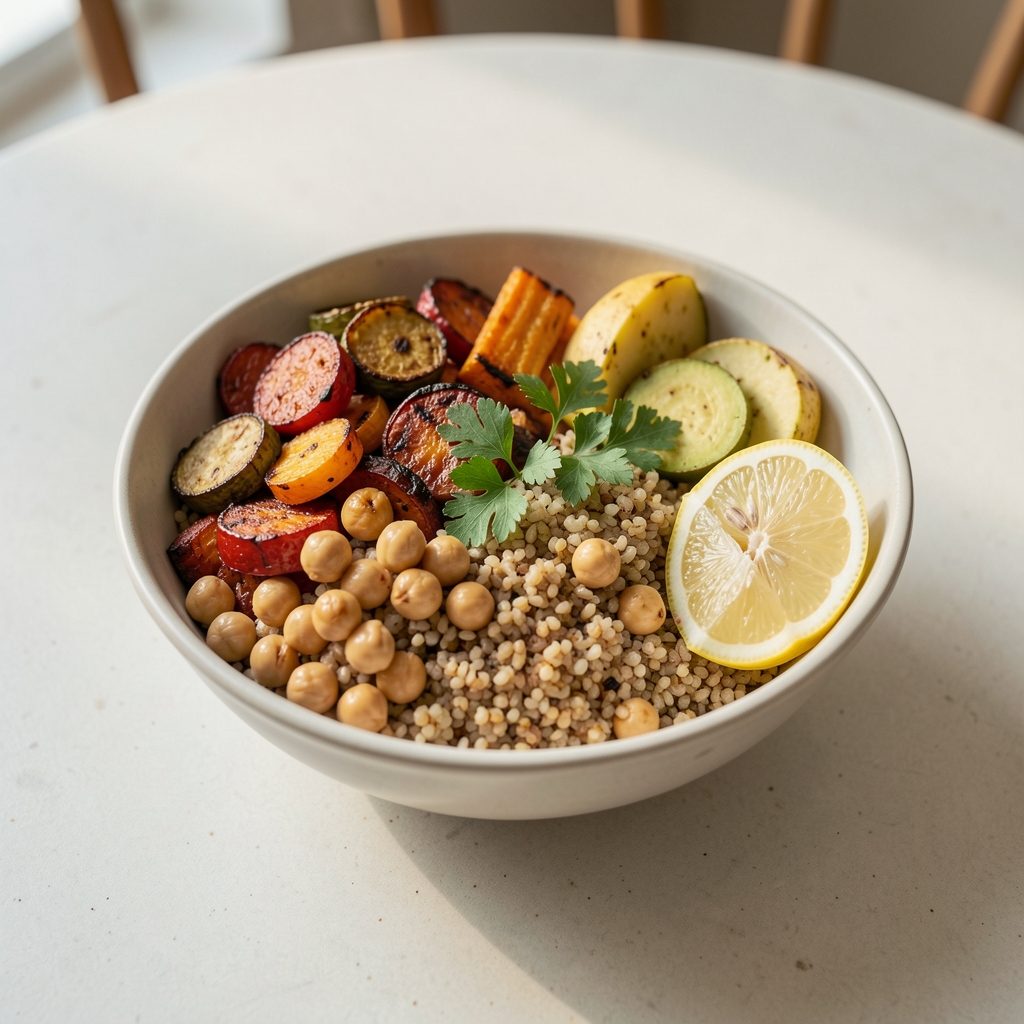
Combine a grain, vegetables, a source of protein and a dressing or sauce. The format works with leftovers and can be served warm or cool.
Kitchen notes · 2026
Lorena recipes are designed as adaptable examples rather than fixed prescriptions. They show how familiar ingredients can be combined, how texture and colour can make a meal inviting, and how a cook can adjust portions, seasoning and preparation to suit a household.
There is no single correct plate. Budget, equipment, culture, appetite, allergies and time all influence what is practical. The recipes below therefore explain the role of each component and offer substitutions without making health promises.
Combine a grain, vegetables, a source of protein and a dressing or sauce. The format works with leftovers and can be served warm or cool.
Use one baking tray for vegetables and a suitable accompaniment, checking cooking times so ingredients are safely prepared.
Pair a familiar base with fruit, seeds or yoghurt according to taste and tolerance. Keep the method simple enough for busy mornings.
A flexible plate
Planning ingredients as components makes substitutions less disruptive. A cooked grain can become a salad, a warm bowl or a side dish. Vegetables can be roasted, steamed or eaten raw where appropriate. A sauce can bring flavour without requiring the rest of the meal to change.
This approach is useful when cooking for more than one person. Each person can adjust texture and seasoning at the table while the main preparation remains shared.
Use the order as a guide, not a rule.
| Role | Examples | Possible alternative |
|---|---|---|
| Base | Potatoes, oats, rice, bread | Another familiar grain or starchy food |
| Colour | Leafy greens, carrots, peppers | Seasonal or frozen vegetables |
| Protein | Beans, eggs, fish, poultry | A household-appropriate option |
| Flavour | Herbs, citrus, spices, yoghurt | A preferred dressing or sauce |
“A recipe is more useful when it leaves room for the cook.”