Half vegetables
Fresh, frozen and tinned vegetables can all contribute. Choose forms that fit appetite, access and digestion.
Topic guide · 2026
Learn how balanced meals, fibre, activity and clinical monitoring can fit together without turning food into a source of fear.

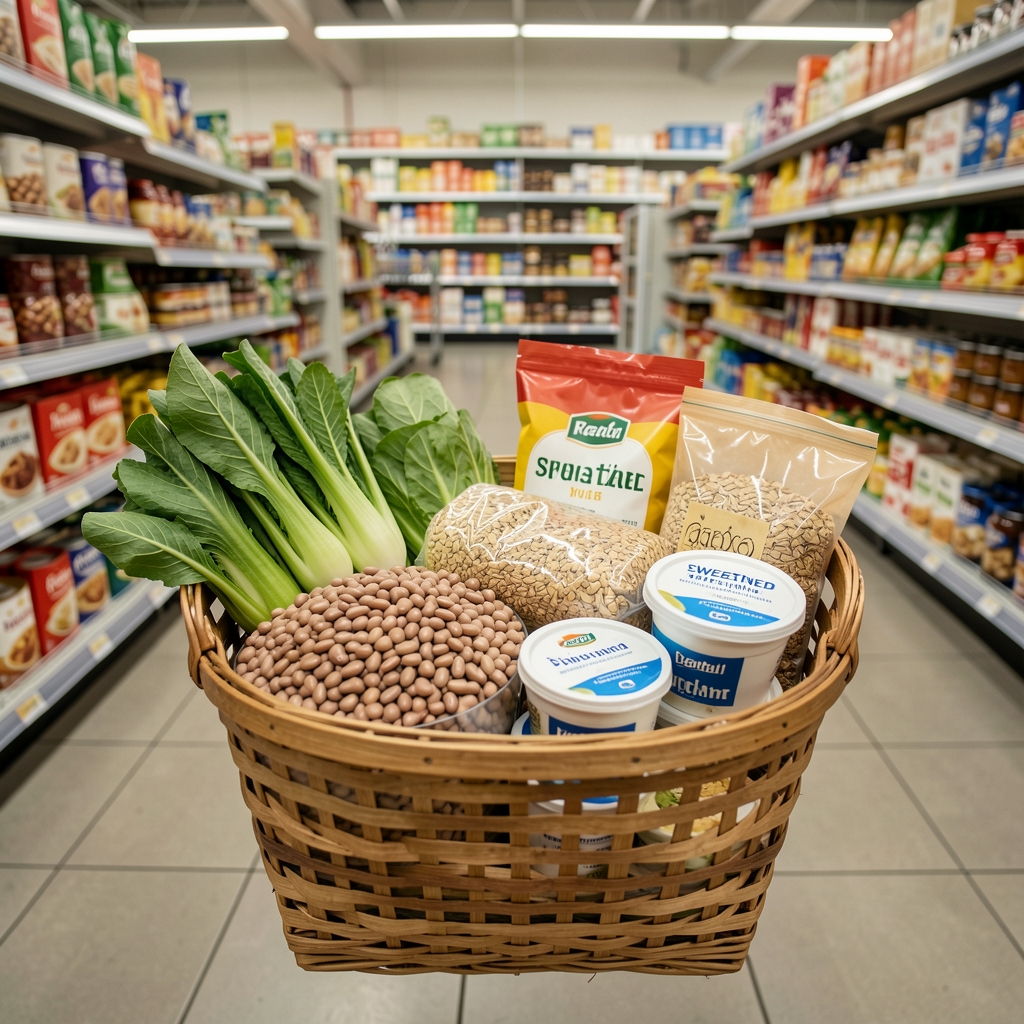
Meals that combine fibre-rich carbohydrates with protein and unsaturated fats may be more satisfying and can make a routine easier to maintain. Individual responses differ, especially when prescribed care or monitoring is involved. This guide is educational and never replaces a personalised care plan.
If you experience symptoms of high or low blood sugar, follow your clinical instructions and seek appropriate help. Do not change medication based on an article.
Fresh, frozen and tinned vegetables can all contribute. Choose forms that fit appetite, access and digestion.
Beans, fish, eggs, yoghurt, tofu and poultry offer varied options. Portion needs are personal.
Whole grains, potatoes or other carbohydrate foods can sit within a meal rather than being treated as forbidden.